Architask
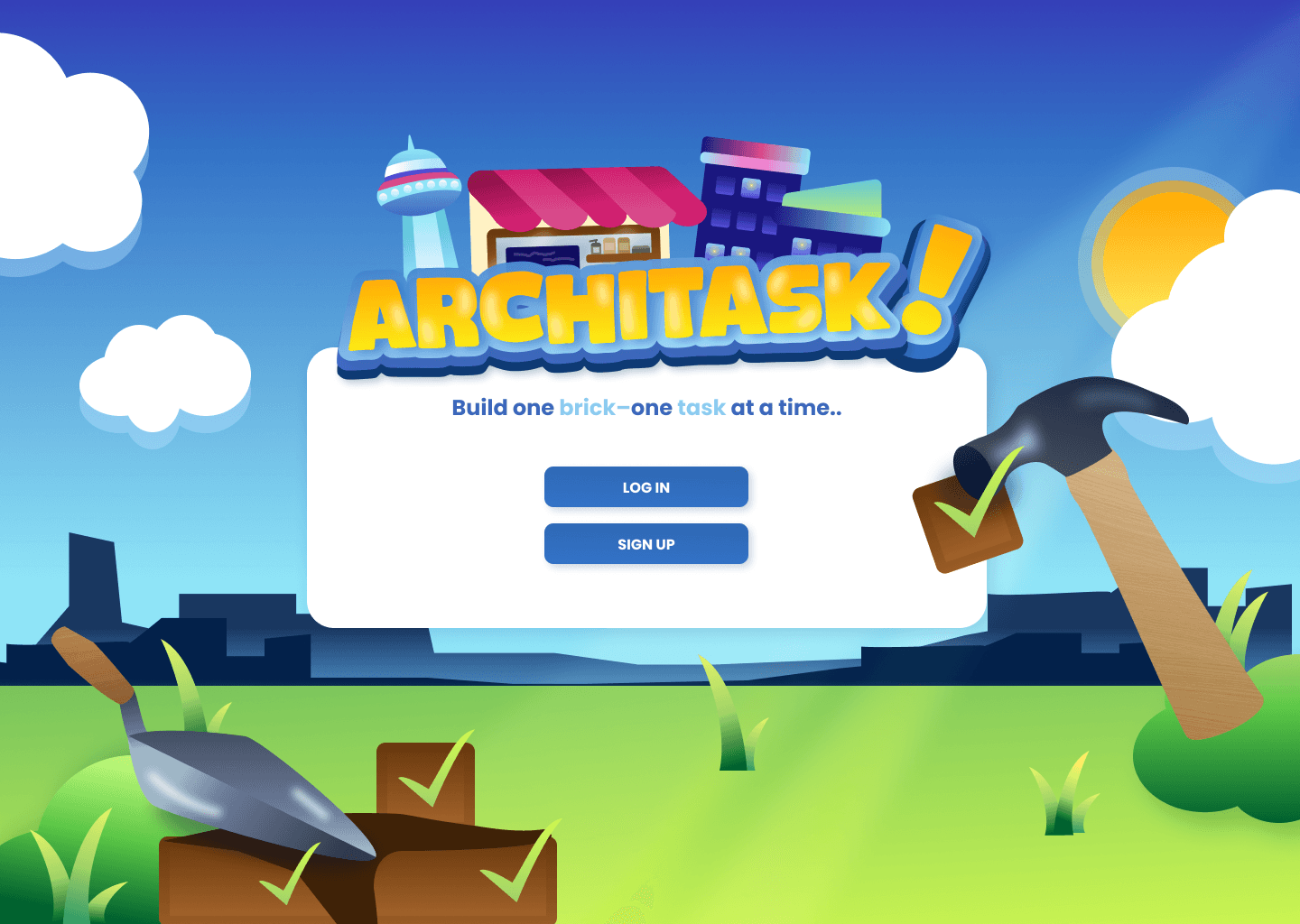
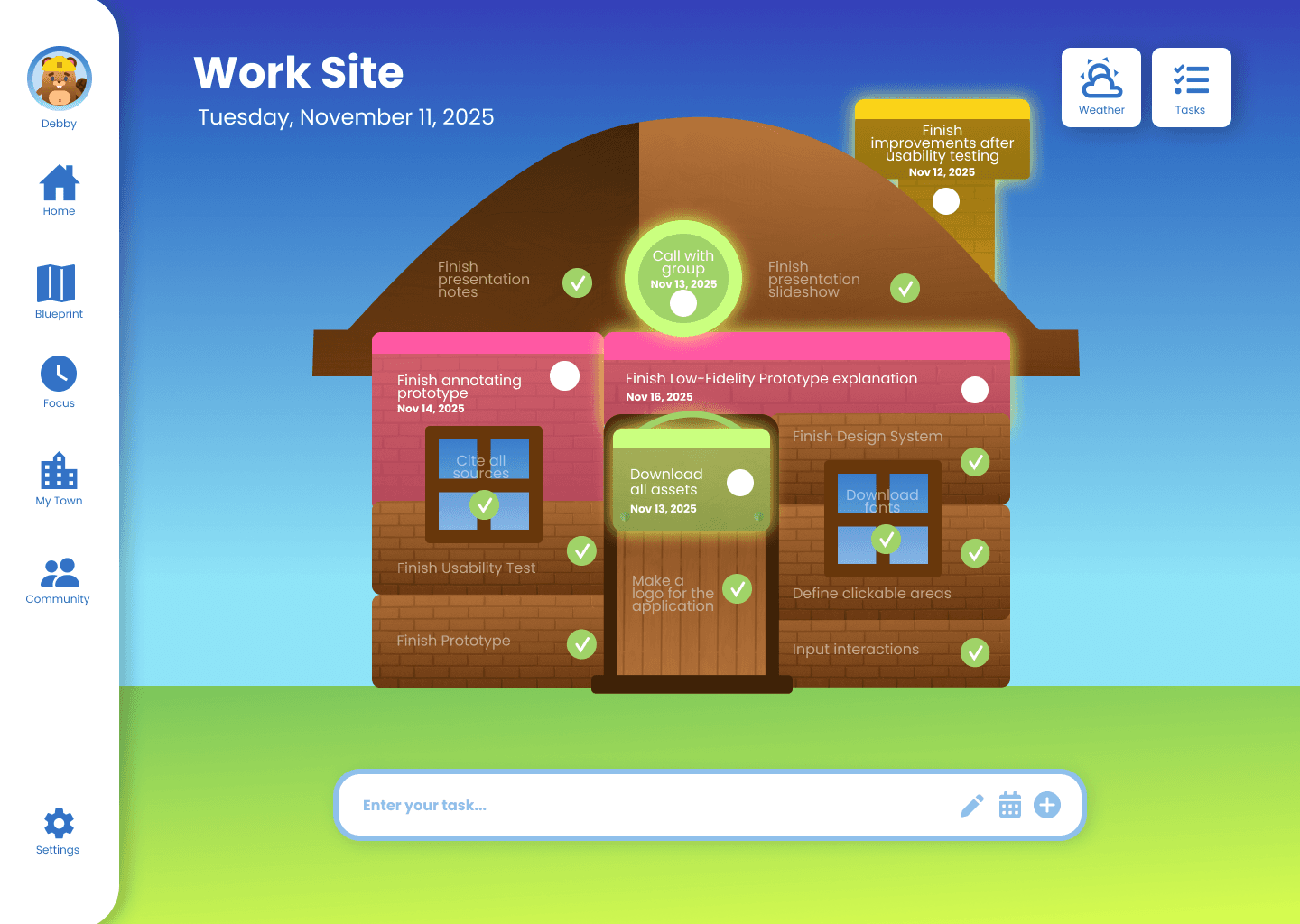
Created by Alisa Tran, Joy Chen, and myself, Architask transforms productivity into a creative, rewarding experience and empowers users to construct a rewarding metropolis from the ground up. By combining gamification, social features, autonomy and visual progress, we give students the tools to stay focused, motivated, and successful while still enjoying the engaging qualities of gaming.
OVERVIEW:
In this course-long project, my group chose to address the issue of gaming addiction among university students. The project required us to conduct background research on the topic, interview participants, identify product requirements, develop wireframes, and create interactive prototypes throughout the design process.
ROLE:
RESEARCHER
UX DESIGNER
DURATION:
SEPT 2025 - DEC 2025
TOOLS:
FIGMA
THE PROBLEM:
University students are increasingly relying on video games as a form of entertainment and stress relief, leading to excessive screen time and unhealthy gaming habits. Competitive and reward-driven games such as League of Legends, Fortnite, Valorant, and Clash of Clans encourage repetitive behaviour through constant dopamine-driven rewards, making it difficult for students to balance academics and leisure. Since academic work is also heavily screen-based, students can easily become distracted by gaming during study periods, negatively affecting productivity, academic performance, and overall well-being. Research has linked gaming addiction to lower academic success, poor sleep, physical strain, and reduced study time among students.
RESEARCH AND TESTING:
The three of us each interviewed three different participants to gain a deeper understanding of how gaming habits and behaviours affect individuals in different ways. By creating a set of specific questions for interviewees, it revealed some significant insights within each participant.

After discussing our findings, we identified five recurring themes across the interviews:
Gaming promotes social connection, but peer influence can encourage excessive gaming.
Gaming provides instant gratification and stress relief through escapism.
Many students follow a “work first, then play” mindset to balance gaming and academics.
Reward-based gameplay reinforces competition, achievement, and continued gaming behaviour.
Gaming becomes a habitual routine that distorts time perception and increases procrastination.
Using our findings, we developed three distinct personas based on the behaviours, motivations, and experiences of the participants we interviewed.


PROTOTYPING:
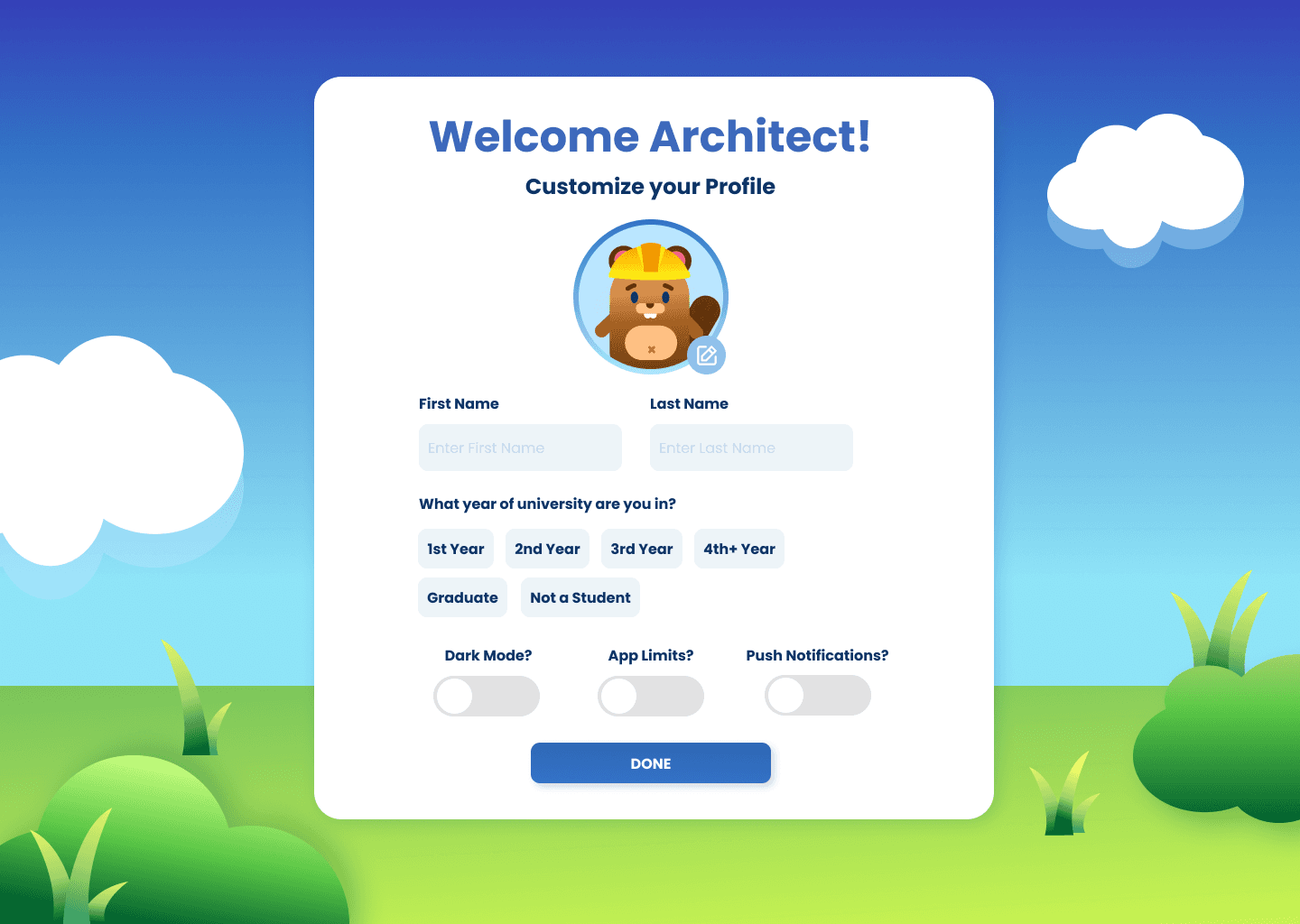
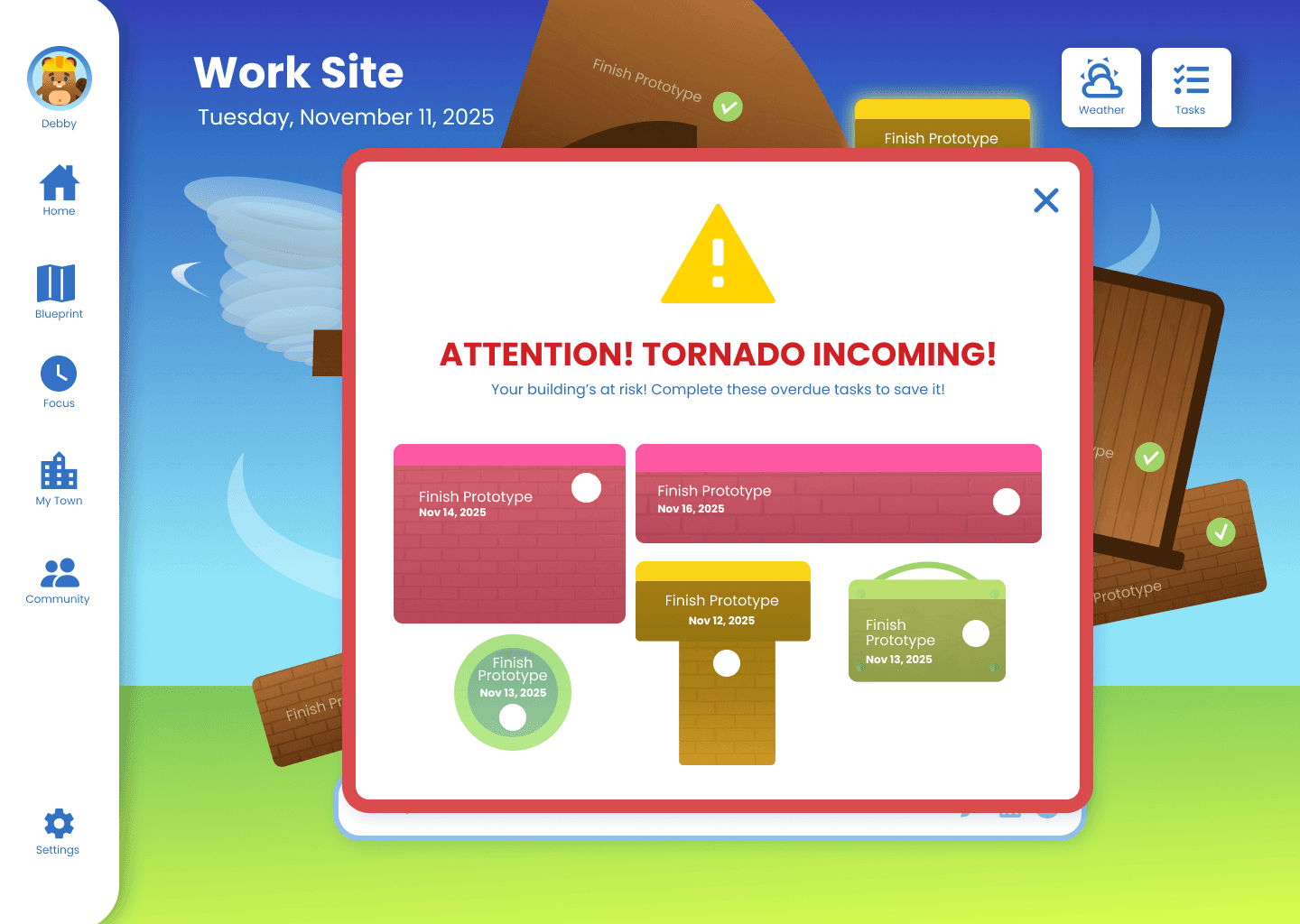
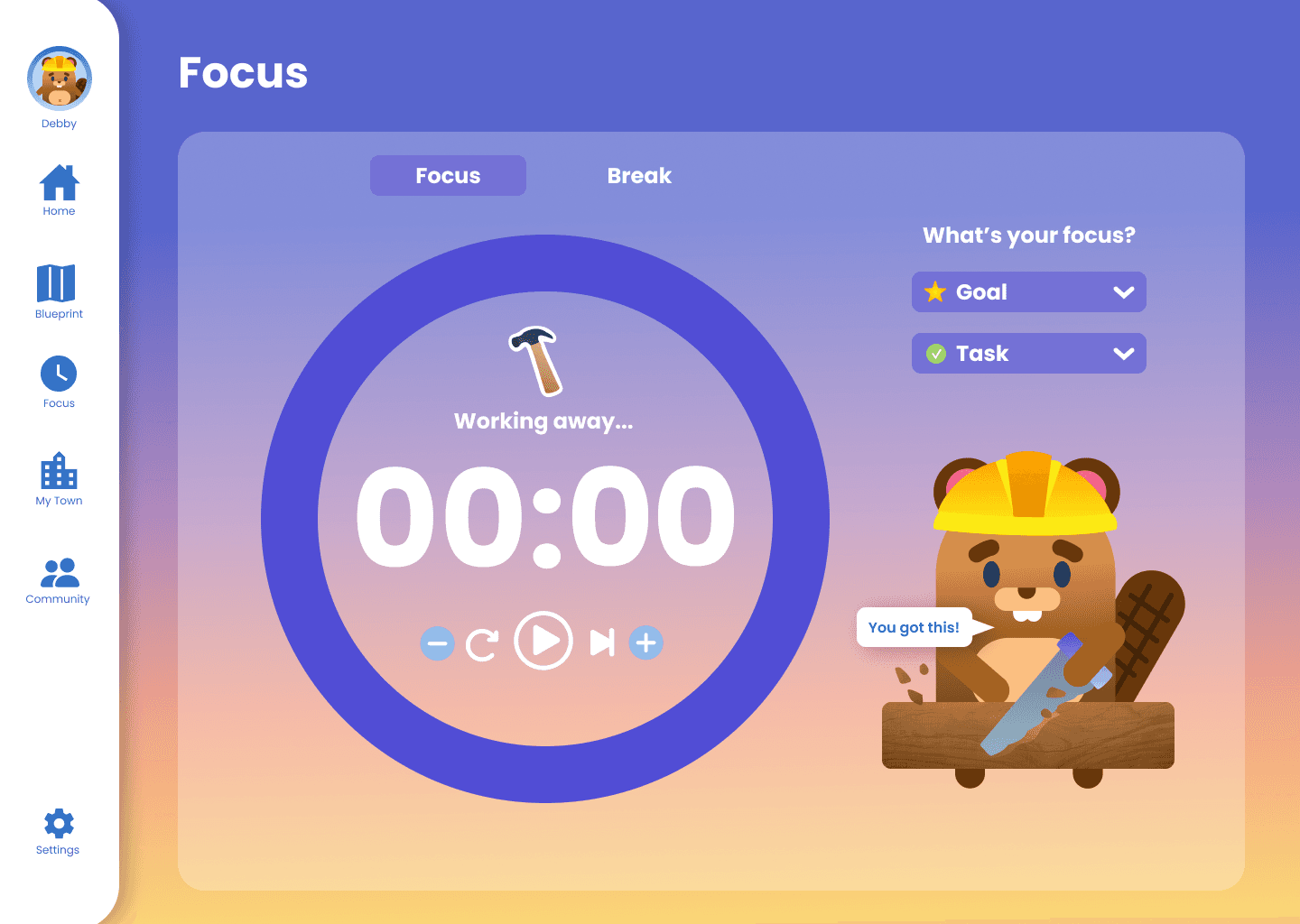
Architask includes four major functional requirements: User Profile & Personalization, Notifications, Task Management, and a Reward and Discipline System. We implemented these requirements through core features such as Priority Ranking, Difficulty Levels, a Customizable Town, a Community Hub, and Focus Modes.
To create interactive features, we developed components within Figma such as buttons, toggles, and drop-down menus. Additionally, certain buttons were designed with smooth screen transitions to create a more seamless and engaging user experience throughout the app.

RETROSPECTIVE:
Through this course-long project, I was introduced to the step-by-step process of user research and design, allowing me to explore a problem that resonates with both myself and my peers while developing practical skills in UX design, prototyping, and problem-solving. Prototyping and creating interactive elements was one of the most challenging parts of this assignment, as it required thoughtful design decisions, careful attention to detail, and the development of an intuitive user flow to ensure a seamless user experience.